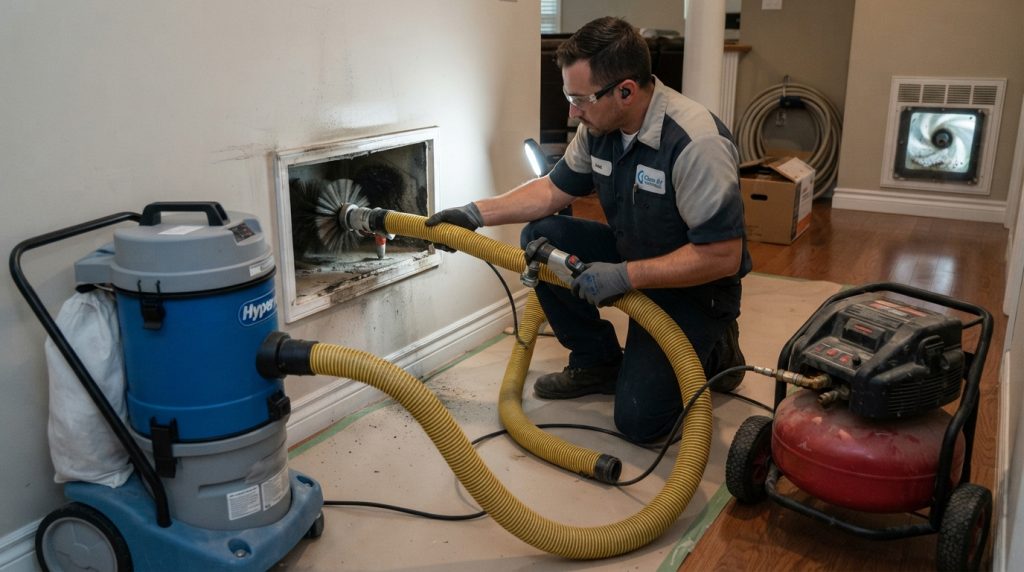
Professional vent cleaning is not simply a matter of removing visible dust: it combines controlled debris collection, mechanical agitation and careful checks of the ventilation network. The right air duct cleaning tools depend on duct material, layout and the nature of the buildup, while a well-planned workflow helps prevent loosened contaminants from spreading into occupied spaces.
From a negative air machine to a vent inspection camera, each tool serves a distinct purpose. Understanding how technicians coordinate suction, brushes, compressed air and airflow measurement reveals why thorough cleaning is as much about method and verification as it is about equipment.
Equipment for professional vent cleaning
Before work begins, technicians assess access points, system configuration and the surfaces inside the ducts. This initial review guides equipment selection and helps protect flexible ductwork, insulation and other components that could be damaged by unsuitable tools.
Collection equipment and HEPA filtration
A negative air machine connects to the duct system and draws air toward a controlled collection point, helping contain dislodged dust during cleaning. A HEPA vacuum captures fine particles at accessible grilles and openings; its sealed filtration system is particularly useful when work takes place near occupied areas.
These devices are complementary rather than interchangeable. The negative-pressure setup supports containment across the duct section being cleaned, while a portable vacuum can target localized debris and help maintain a tidy work area.
Inspection equipment and access planning
A vent inspection camera can reveal obstructions, heavy deposits, disconnected sections or moisture-related concerns inside otherwise hidden ductwork. Camera findings help technicians select a suitable cleaning approach and identify conditions that may need repair rather than more aggressive agitation.
Access panels and openings must be chosen with the duct’s construction in mind. A clear plan reduces unnecessary cutting and makes it easier to restore openings securely once the work is complete.
Containment methods for duct cleaning
Effective cleaning depends on keeping loosened material moving toward collection equipment instead of allowing it to settle elsewhere in the system. Technicians therefore coordinate negative pressure with the cleaning tool and work through manageable duct sections.
Negative-pressure control
With the collection unit operating, dust and debris are drawn toward the machine as technicians agitate the interior surfaces. Sealing nearby registers or isolating branches can help direct suction through the section under service, although the setup must suit the system’s design.
Containment also involves protecting the immediate work area and checking that connections remain secure. A drop in suction or a poorly fitted hose can reduce debris capture, so equipment performance deserves attention throughout the job.
Work-area protection and debris handling
Grilles, furnishings and surrounding finishes can be covered before cleaning begins, particularly where access points are opened. Collected material should be handled in a way that limits re-entry into the building, and reusable tools should be cleaned between work areas when appropriate.
These measures are not cosmetic details: they support cleaner work conditions and help prevent cross-contamination between duct sections. Good containment makes the cleaning process more controlled from setup through final cleanup.
Agitation tools for removing duct deposits
Once suction and containment are established, technicians select an agitation method suited to the material and duct geometry. The aim is to release deposits without harming the inner lining, insulation or joints.
Rotary brushes and air whips
A rotary brush system uses a powered rotating head to loosen adhered dust and debris. Brush size, stiffness and operating speed should match the duct surface; excessive force can damage delicate or internally lined sections.
Air whips use flexible, rapidly moving lines to dislodge buildup, especially in duct runs where a brush may be difficult to manoeuvre. Technicians can choose between these approaches—or use them selectively—based on inspection findings rather than applying one method throughout the system.
Compressed-air tools and method selection
Compressed air tools direct air into the duct to move loose particles toward the collection point. They can reach bends and branches, but their effectiveness depends on maintaining adequate capture; blowing debris without controlled suction may spread it into the building.
Common selection factors include the following:
- Duct construction: rigid metal, flexible material and lined ducts require different levels of agitation.
- Deposit condition: loose dust may need less force than compacted debris.
- Access and geometry: bends, branch connections and long runs influence tool reach.
- System condition: damaged or disconnected sections may require attention before cleaning continues.
Verification methods after vent cleaning
Visible debris removal is only one measure of a completed job. Technicians also review accessible duct sections, confirm that components have been reassembled and consider whether the system’s airflow has changed as expected.
Airflow measurement and system checks
Airflow measurement can help identify uneven delivery or restricted movement through registers, but readings need context: fan settings, filter condition and damper positions all affect results. Comparing measurements taken under consistent conditions is more informative than relying on a single reading.
Inspection cameras may be used again to examine cleaned areas and confirm that no substantial deposits remain in accessible sections. These checks do not replace repairs when a duct is damaged, obstructed or poorly connected; cleaning and corrective work address different problems.
| Tool or method | Primary role | Key consideration |
|---|---|---|
| Negative air machine | Creates controlled suction and captures loosened debris | Secure connections and suitable containment |
| HEPA vacuum | Collects fine particles at grilles and access points | Filtration and equipment sealing |
| Rotary brush system | Agitates deposits on duct surfaces | Brush selection must suit the material |
| Vent inspection camera | Inspects hidden sections and supports verification | Findings depend on access and visibility |
| Airflow measurement | Checks air movement at selected points | Readings require consistent operating conditions |
Duct sealing and ventilation system maintenance
Cleaning may reveal leaks, loose joints or damaged insulation that interfere with system performance. Duct sealing can address suitable leakage points, but it should be based on inspection and carried out with materials compatible with the duct and applicable requirements.
Regular ventilation system maintenance also includes tasks beyond duct cleaning, such as filter replacement and checking accessible components. A qualified professional can assess whether cleaning, sealing or another form of service is appropriate for the system’s actual condition.