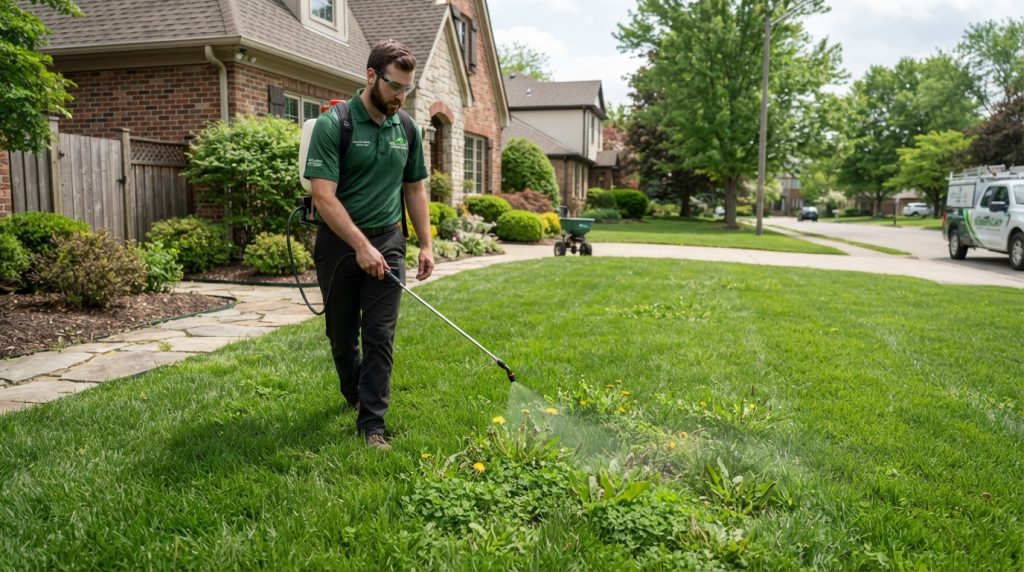
A lawn is not simply a green surface to trim: it is a living system shaped by soil structure, root growth, moisture and regular maintenance. When soil health declines or grass is cut too short, turf becomes less able to compete with weeds, even if the lawn looks tidy immediately after mowing.
Effective turf care begins below the blades of grass and continues with choices made at the mower. Understanding how mowing height, soil fertility and grass roots work together helps build healthy lawns that resist weed invasion naturally. The result is a more resilient landscape, supported by practices that improve the ground rather than relying on repeated corrective treatments.
Soil Health Foundations for Strong Turf
Soil health influences how well turfgrass absorbs water, accesses nutrients and withstands stress. A compacted or nutrient-poor lawn may develop thin patches, leaving sunlight and open ground for weeds to take hold.
Soil Structure and Grass Roots
Healthy soil contains a balance of mineral particles, organic matter, air and water. When foot traffic or heavy equipment compresses the ground, pore spaces shrink; water may run off instead of reaching the roots, while oxygen becomes harder to access.
Grass roots need room to spread through the soil profile. Aeration can relieve compaction by creating channels that allow air, water and nutrients to penetrate more effectively, particularly in frequently used areas or clay-rich soils.
Soil Fertility and Nutrient Balance
Soil fertility is not a matter of applying as much fertilizer as possible. Excess nutrients can encourage rapid, weak growth and may move into waterways, while deficiencies can limit the dense, vigorous cover that helps with weed prevention.
A soil test can identify pH and nutrient conditions before amendments are chosen. This makes treatment more precise and helps avoid unnecessary applications that may disrupt the soil’s natural balance.
Because soil conditions vary across a lawn, simple observations can also point to areas that need attention. Look for these common signs before changing a maintenance routine:
- Water pooling or running off may indicate compaction or poor drainage.
- Thin, pale growth can reflect nutrient stress, unsuitable pH or restricted roots.
- Persistent bare patches may expose soil to weed seed germination.
Mowing Height Strategies for Weed Control
Mowing height affects how much leaf area remains after each cut and how effectively turf shades the soil. A lawn cut too low loses energy reserves and becomes more vulnerable to heat, drought and competing plants.
Mowing Height and Canopy Density
Taller grass generally casts more shade over the ground, limiting the light available to many weed seedlings. It also preserves more leaf surface for photosynthesis, helping the plant maintain root growth and recover between cuts.
Mowing Practices That Support Turf
Sharp mower blades make clean cuts, whereas dull blades tear leaf tips and can leave the lawn looking ragged. Mowing when the grass is dry usually produces a more even result and reduces clumping, which can otherwise smother patches of turf.
Grass clippings can often remain on the lawn when they are finely cut and evenly dispersed. They return nutrients to the soil as they break down, but thick clumps should be redistributed or removed to prevent uneven coverage.
For practical mowing decisions, consider the following adjustments as conditions change:
- Raise the deck during hot or dry weather to preserve more leaf area.
- Change direction regularly to reduce ruts and repeated stress on the same turf.
- Keep blades sharp for cleaner cuts and more consistent recovery.
These habits do more than improve appearance: they help maintain a dense canopy that naturally makes weed establishment more difficult.
Guidance on mowing is most useful when considered alongside local grass types and seasonal growth patterns. The following video search offers additional perspectives on setting and managing lawn height.

Integrated Turf Care for Lasting Weed Prevention
Good mowing supports a stronger lawn, but it cannot correct every underlying problem. Effective weed control combines suitable cutting practices with appropriate watering, soil care and prompt attention to thinning areas.
These measures reinforce one another: well-rooted grass competes more effectively, while consistent maintenance reduces the openings weeds need to establish.
Watering and Seasonal Recovery
Frequent, shallow watering can encourage roots to remain near the surface, where they are more exposed to dry conditions. When suitable for the soil and grass type, deeper, less frequent watering encourages roots to grow farther down and can improve resilience between rainfall or irrigation.
Water needs change with temperature, soil texture and exposure. Observing the lawn helps prevent both drought stress and waterlogged ground, which can weaken turf and create conditions favorable to some weeds.
| Practice | Benefit to turf | Contribution to weed control |
|---|---|---|
| Soil testing | Clarifies pH and nutrient needs | Supports vigorous, even growth |
| Appropriate mowing height | Preserves leaf area and root energy | Helps shade soil and reduce openings |
| Compaction relief | Improves movement of air and water | Encourages stronger grass coverage |
| Consistent watering | Reduces avoidable moisture stress | Helps turf compete with unwanted plants |
Each practice works best as part of a coordinated approach rather than as an isolated fix. Further demonstrations of integrated lawn care can help clarify how maintenance choices interact throughout the growing season.
Healthy lawns are built gradually through informed decisions about soil, mowing and water. For advice tailored to local grass species, soil conditions or persistent weed problems, consult a qualified turf or lawn-care professional.