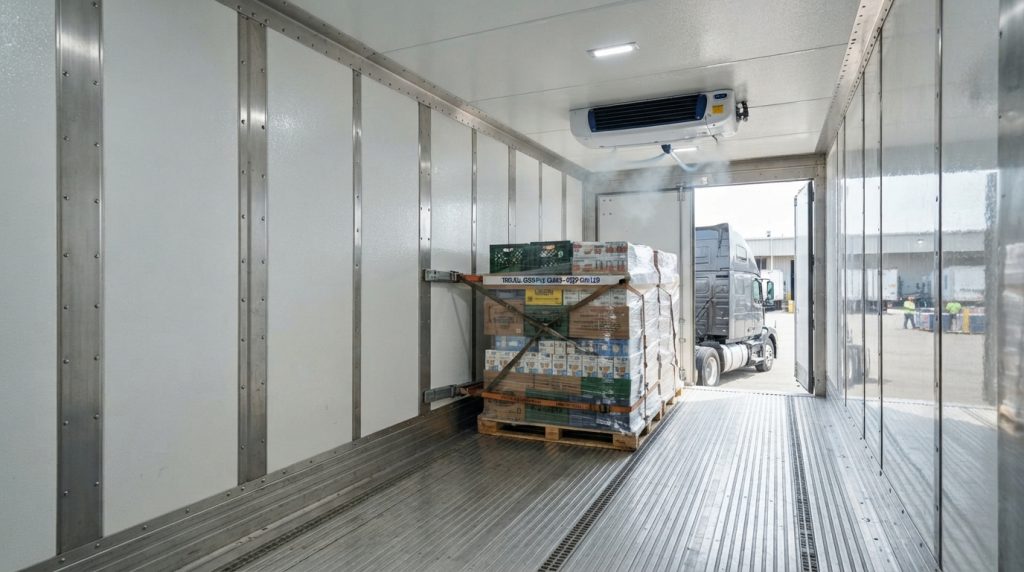
Truck body insulation does more than slow heat transfer: it helps protect temperature-sensitive cargo from the swings caused by weather, loading cycles and frequent door openings. The right material depends on the vehicle’s duty, the required temperature range and the way the insulated body is built.
Polyurethane foam, mineral wool, polystyrene boards and reflective layers each offer different strengths, but no product can compensate for gaps, dampness or poorly sealed joints. Understanding how these materials perform together makes it easier to maintain steady conditions throughout a journey.
For fleet operators and body builders, the goal is not simply to choose the insulation with the lowest stated conductivity. Reliable cargo protection comes from matching material properties with sound construction, moisture control and routine inspection.
Material choices for truck body insulation
Truck body insulation commonly combines a core material with protective facings and carefully sealed joints. The most suitable option depends on the balance required between thermal resistance, weight, fire behaviour, moisture resistance and the space available within the body panels.
Core materials and their distinct strengths
Polyurethane foam is widely used in vehicle bodies because it can provide strong insulation in a relatively thin, lightweight layer. Polyisocyanurate insulation is related in composition and can offer good thermal performance, though the complete panel system—not just the core—determines how it behaves in service.
Extruded polystyrene has a closed-cell structure that helps limit water uptake, making it a practical choice where exposure to damp conditions is a concern. Expanded polystyrene is also lightweight and insulating, but its suitability depends on the panel design and the protection provided against impact, water and heat.
Mineral wool and fiberglass insulation are fibrous alternatives that can contribute to fire and sound performance. They need suitable enclosure and protection from moisture; when wet or compressed, their insulating effectiveness may be reduced.
Voici une suite plus courte, avec un tableau intégré, tout en gardant le ton professionnel et informatif de l’article.
Comparing Truck Insulation Materials
Each insulation material offers specific advantages depending on the vehicle’s operating conditions. Comparing their main properties helps fleet operators and manufacturers make more suitable choices.
|
Insulation Material |
Main Advantage |
Key Consideration |
|---|---|---|
|
Polyurethane foam |
High thermal resistance and low weight |
Requires proper joint sealing |
|
Polyisocyanurate |
Strong thermal performance |
Performance depends on panel construction |
|
Extruded polystyrene |
Low moisture absorption |
Needs adequate impact protection |
|
Expanded polystyrene |
Lightweight and economical |
Requires protection from moisture and heat |
|
Mineral wool |
Fire and sound insulation |
Must be protected against moisture |
|
Fiberglass |
Lightweight and sound absorption |
Can lose effectiveness when wet or compressed |
Factors That Affect Insulation Performance
Choosing the right material is only one part of effective truck body insulation. Installation quality also determines how well the system performs during daily operations.
Joint sealing prevents outside air from entering through gaps between panels, doors and structural connections. Moisture control is equally important because condensation can damage insulation and reduce its effectiveness. Protective interior linings also help prevent mechanical damage during loading and unloading.
Additionally, the insulation thickness should match the required temperature range without unnecessarily reducing cargo capacity. Regular inspections help identify damaged panels, loose seals and other weaknesses before they affect cargo conditions.
Conclusion
Effective truck body insulation depends on selecting suitable materials and installing them correctly. By considering thermal performance, moisture resistance, weight and construction quality, fleet operators can protect temperature-sensitive cargo and maintain more consistent conditions throughout transportation.