A low nightly rate says little about whether a hotel will deliver a restful, hygienic stay. Reliable budget accommodation is better judged by measurable soundproofing, consistent mattress care and clear evidence that everyday cleaning procedures are followed.
There is no single worldwide certificate that guarantees every inexpensive hotel is quiet and clean. Instead, guests and operators can look for defined acoustic targets, well-maintained room components and repeatable housekeeping controls. Taken together, these measures make budget hotel quality easier to assess without confusing attractive claims with verifiable standards.
Hotel soundproofing standards that support restful stays
Effective soundproofing starts with identifying where noise enters: through façades, adjoining walls, doors, ceilings, floors and building services. A hotel should set appropriate soundproofing standards during design or refurbishment, then check that the finished rooms perform as intended.
Sound Transmission Class (STC) is one measure used to describe how well a building element reduces airborne sound. It can help compare walls and doors, but it does not capture every real-world issue: gaps, poorly sealed frames and sound travelling around a barrier can undermine an otherwise strong assembly.
Ratings for noise insulation and room privacy
Specifications should distinguish between noise passing through a wall and sound leaking along connected paths. Acoustic professionals may assess both airborne and impact noise, while also considering corridor activity, plumbing, lifts and mechanical equipment.
A hotel’s quiet room rating is most useful when it is tied to a stated measurement method and clearly defined conditions, rather than presented as a universal certification. Because local building codes and acoustic criteria vary, properties should document the applicable requirements and any additional targets they have adopted.
Construction details for acoustic glazing
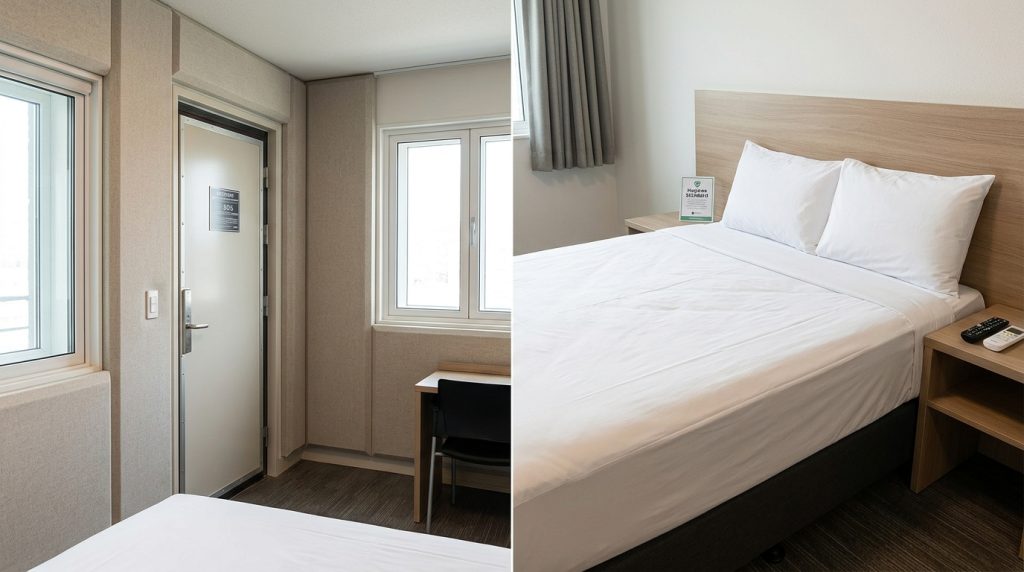
Windows facing traffic or other persistent sources may benefit from acoustic glazing, suitable frame seals and careful installation. Yet glazing alone cannot solve noise that travels through vents, façade joints or lightweight partitions; the entire sound path needs attention.
Doors also deserve close inspection. A tight perimeter seal, a well-fitted threshold and a solid, properly installed door can reduce corridor noise, while soft furnishings may help control reverberation inside the room but cannot replace sound insulation between spaces.
Mattress hygiene standards that protect guest wellbeing
Quiet surroundings matter little if bedding care is inconsistent. Strong mattress hygiene depends on documented cleaning routines, inspection between stays and prompt action when a mattress or its covering is damaged or contaminated.
A mattress protector can serve as a practical barrier against moisture and soiling, provided it is intact and cleaned or replaced according to the manufacturer’s instructions. Protectors should not be treated as a substitute for laundering sheets, inspecting the mattress or following appropriate procedures after a suspected pest issue.
Protocols for bedding sanitation and bed bug prevention
Good bedding sanitation relies on clear separation between used and clean linen, suitable laundering practices and protected storage. Housekeeping procedures should specify how staff handle bedding, what conditions require replacement, and how rooms are cleaned without transferring contaminants between areas.
Bed bug prevention is a distinct part of room care, not a claim that can be guaranteed by routine laundering alone. Regular inspections of mattress seams, bed frames and nearby furnishings can help identify signs early; suspected activity calls for a documented response and qualified pest-control support.
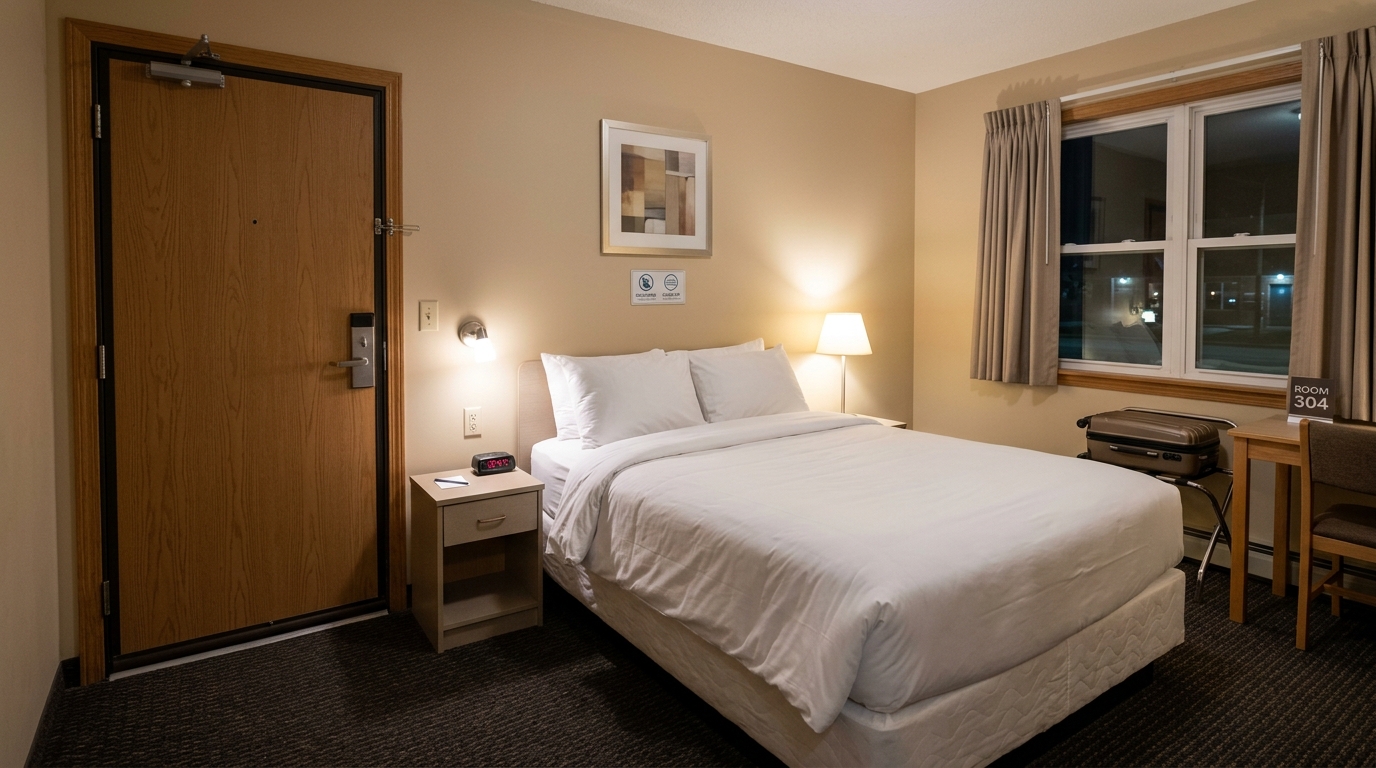
Useful procedures are specific enough to be checked. A dependable hotel should be able to explain how it manages:
- Mattress and bed-frame inspections, including how concerns are recorded and escalated.
- Mattress protectors, including checks for tears, soiling and correct laundering or replacement.
- Sheets, pillowcases and other bedding, including handling, cleaning and clean-linen storage.
- Room turnover, including the separation of cleaning materials and the follow-up of reported issues.
Documentation that makes hotel cleanliness standards verifiable
Written procedures only build confidence when they are used consistently. Hotel cleanliness standards are easier to verify when staff training, inspection records and corrective actions are documented and reviewed, rather than left to informal habits.
For guests comparing properties, transparent descriptions of room features and service practices are more informative than broad assurances. A hotel may also communicate how it handles noise complaints, equipment maintenance and bedding concerns, while avoiding promises that cannot be supported by inspection or measurement.
Evidence for budget hotel quality
Evidence does not need to be elaborate to be meaningful. Maintenance logs can show that door seals, window fittings and ventilation equipment are checked; housekeeping records can show that mattress inspections and linen procedures are part of routine room turnover.
When assessing a property, look for a combination of physical condition and accountable processes. These signals do not replace independent audits or local compliance checks, but they help distinguish substantiated care from marketing language.
| Area | Useful evidence | What it indicates |
|---|---|---|
| Room acoustics | Defined targets, inspection records and attention to gaps or flanking paths | Noise control is planned and maintained |
| Windows and doors | Intact seals, suitable glazing and functioning closures | Common routes for outside and corridor noise are addressed |
| Mattress care | Inspection routines, sound protectors and documented follow-up | Hygiene is managed beyond changing the sheets |
| Housekeeping | Staff training, linen-handling procedures and corrective records | Cleanliness practices can be repeated and reviewed |
Ultimately, a reliable inexpensive hotel is defined less by its category than by the standards it can demonstrate: effective noise insulation, carefully maintained rooms and consistent mattress hygiene. For property-specific acoustic assessments, pest concerns or sanitation procedures, consult qualified professionals who can recommend suitable measures for the building and local requirements.