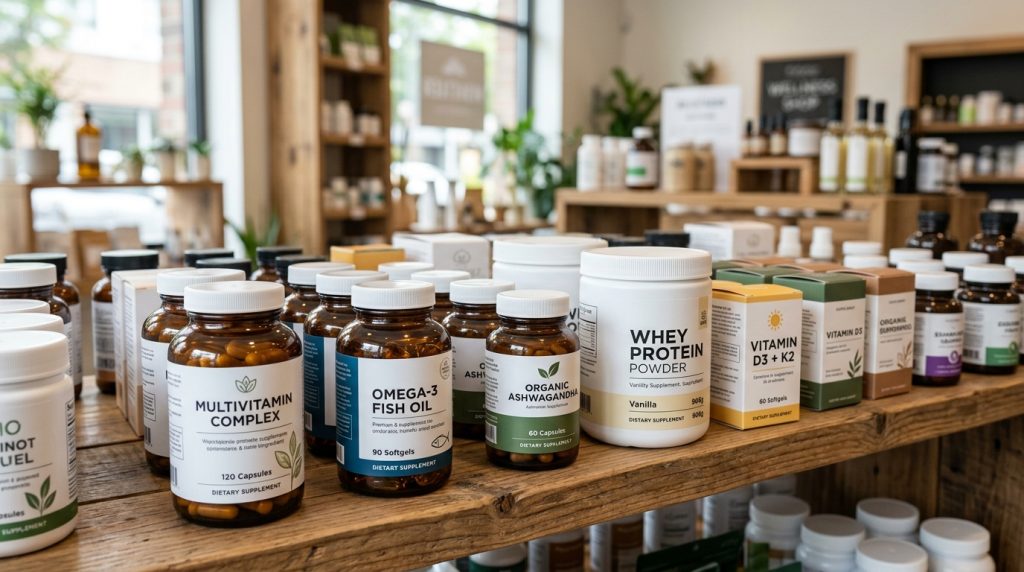
Formulation stability is more than a date printed on a bottle: it is evidence that a supplement can retain its identity, strength, quality and intended performance throughout storage. For private label supplements, the right test plan depends on the ingredients, dosage form, excipients, manufacturing process and packaging—not on a one-size-fits-all panel.
Stability testing for private label supplements
A stability protocol examines how a finished product changes over time under defined conditions. Testing commonly tracks active ingredient potency, microbial quality, appearance, odour, texture and, where relevant, dosage-form performance. The goal is to support an evidence-based shelf life and identify changes that could affect safety, label accuracy or consumer use.
Real-time testing stores products under intended or appropriately justified conditions and evaluates them at planned intervals. Accelerated stability testing exposes samples to elevated temperature and humidity to reveal potential degradation sooner; it can inform development decisions, but it does not automatically replace real-time data or justify a particular expiry period. ICH Q1A(R2) offers a framework often consulted in stability planning, though its direct applicability to a dietary supplement depends on the product and regulatory context.
Protocol design and testing intervals
Testing intervals should capture meaningful change, not simply fill a calendar. A programme may begin with a baseline assessment and include further measurements during storage, with the schedule adjusted to the formulation, risk profile and intended shelf life. Accelerated conditions, real-time conditions and light exposure should be selected and documented according to the product’s likely distribution and storage environment.
Excipient compatibility in supplement formulation
Excipients do more than give a capsule or tablet its shape. Binders, fillers, lubricants, coatings, sweeteners and disintegrants can affect processing, moisture uptake, chemical stability and how a dosage form releases its active ingredients. Excipient compatibility assessment therefore asks whether the ingredients remain stable and whether the finished product continues to perform as intended.
Moisture sensitivity and dosage-form risks
Moisture sensitivity is especially relevant to hygroscopic vitamins, botanical powders, probiotics and gummies. Water can promote chemical breakdown, microbial growth, caking or changes in tablet hardness; water activity can provide useful information about microbial risk, while moisture-content testing measures a different property. A low moisture result alone does not establish microbial safety or prove that the product will remain stable.
Test selection by formulation and risk
The most useful test panel is the one that addresses a product’s credible failure modes. A dry mineral capsule, a moisture-sensitive probiotic and a fruit-flavoured gummy do not present identical stability challenges. The following overview links common concerns to suitable assessments; a qualified laboratory or formulation specialist should tailor methods and limits to the actual product.
| Product concern | Relevant assessment | What it helps evaluate |
|---|---|---|
| Potency loss or ingredient interaction | Validated potency assay, such as HPLC where suitable | Active content and changes during storage |
| Moisture uptake | Moisture content and, where relevant, water activity | Risk of degradation, caking or microbial growth |
| Microbial quality | Microbial testing for counts and specified organisms | Microbiological integrity against product specifications |
| Tablet or capsule performance | Disintegration, dissolution and physical tests as appropriate | Breakup, release behaviour and dosage-form consistency |
| Container or closure effects | Packaging compatibility and stability in final pack | Protection from moisture, light and other environmental factors |
Quality controls for a defensible shelf life
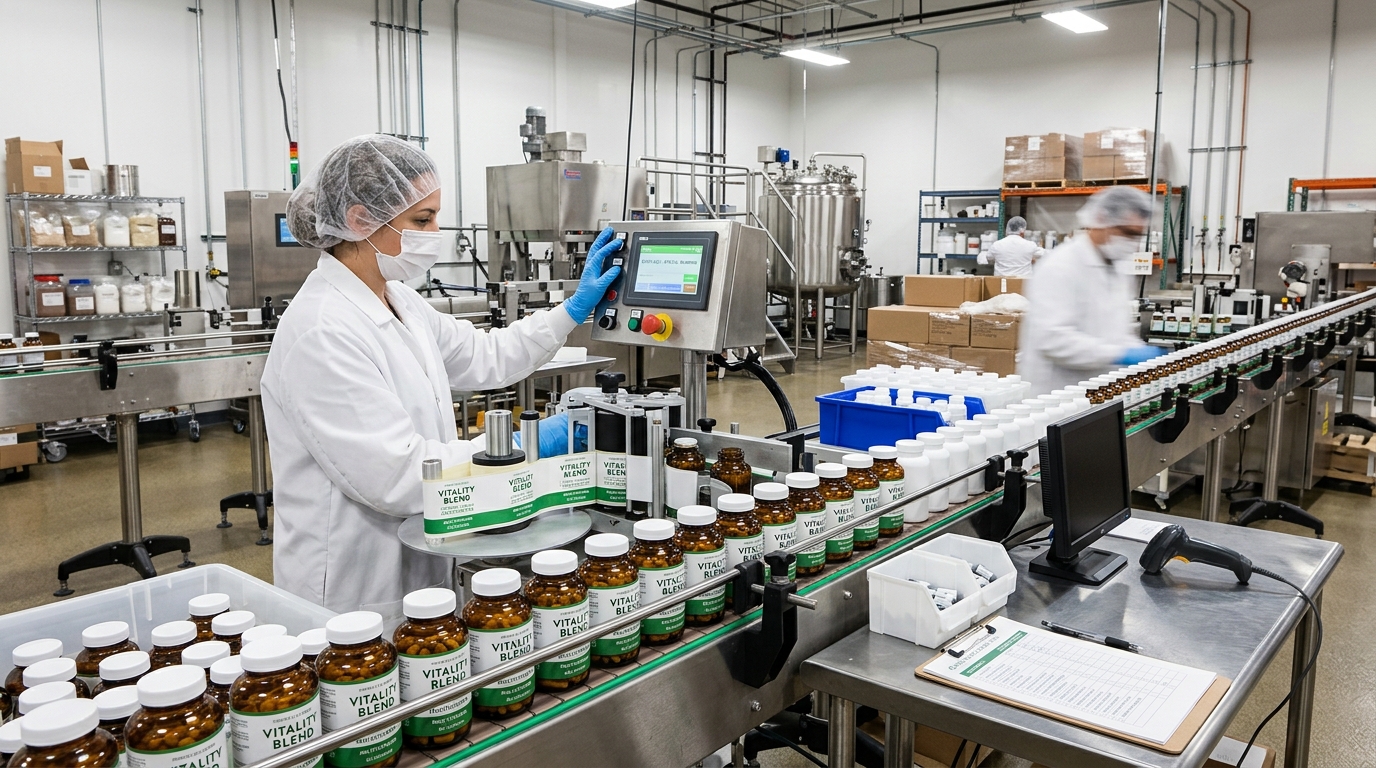
Stability evidence is strongest when it is supported by sound manufacturing records and appropriately qualified laboratories. Under 21 CFR Part 111, firms are responsible for establishing and meeting specifications; supplier documents can inform that work, but should not replace appropriate verification and oversight. Laboratory reports should identify the sample and batch, method, results and relevant acceptance criteria.
Before approving a testing plan, manufacturers can use a short risk-based checklist:
- Review the formula: identify sensitive actives, botanical variability, excipients and likely interaction pathways.
- Define storage conditions: consider expected temperature, humidity, light exposure and distribution conditions.
- Test the final package: assess the marketed container, closure and any moisture-control components.
- Choose fit-for-purpose methods: select validated or appropriately justified assays for the formulation matrix.
- Document decisions: record protocols, results, deviations and the rationale for the proposed shelf life.
Laboratory evidence and release decisions
An ISO/IEC 17025-accredited laboratory can provide evidence that specified tests fall within its accredited scope and are performed under a quality system. Accreditation is not a substitute for choosing the right method: a laboratory should be able to explain how its procedure handles the product matrix, especially for complex blends, gummies or botanical products.